Tonk - Classic Tunk ZingPlay
- 4.4
- Rating
- 10.00K
- Installs
- Free
- Price
 Analysis by App-foxy
I approached Tonk - Classic Tunk ZingPlay as a quick card-game option rather than as a large, feature-heavy mobile release. That distinction matters. Its store summary, “Game For Us User,” is not very informative, while the short description simply identifies it as Tonk. In practice, the useful question is whether you want a focused Tonk experience from VNG ZingPlay Studio, or whether you would be happier with a broader card-game app that offers several formats in one place.
This is a free game in the card category, available for Android devices running version 8.0 or later. It is marked for Everyone 10+, and the current release is version 1.1. The public response is encouraging: it holds a 4.4 average from around 700 ratings, with more than 10 thousand installs. Those figures suggest a modest but real audience, not the scale of a mainstream card platform. I would treat that as a useful signal of early interest, while still judging the game mainly by how well its particular style fits your habits.
What I would check before choosing this Tonk game
My first decision criterion would be how specifically I want to play. A dedicated Tonk title can be appealing when I already know I want Tonk and do not want to search through menus for it. By contrast, a general card app is usually the better choice when I regularly move between several games, such as solitaire-style formats, poker variants, trick-taking games, or casual multiplayer tables.
You May Also Like

 Pandora - Music & Podcasts
Pandora’s Music Is Easy to Start, but Harder to Recover
Pandora’s strength is its low-effort path from a seed to a station. Its weak spot is how much confidence it asks you to place in connection, setup, and quiet recovery.

 8 Ball Pool
 Is Built on Rivalries, Rematches, and Routine
A close look at the rivalries, rematches, shared routines, and unanswered safety questions that turn a quick pool match into a persistent mobile community.

 Samsung Music
’s Quiet Strength Is Playing What You Already Own
Its reach comes less from spectacle than from dependable access to a personal library. That simplicity is both the app’s strongest retention engine and its ceiling.

 AccuWeather: Weather Radar
AccuWeather Review: A Quick, Clear Forecast for Everyday Decisions
For everyday plans, the best forecast is the one you can understand quickly. AccuWeather makes rain timing, radar, and local conditions easy to act on, with a few trade-offs.

 Hill Climb Racing
Why Hill Climb Racing Still Turns Crashes Into One More Run
A tiny car, a bumpy hill and one more upgrade: Hill Climb Racing keeps resurfacing because its simple chaos makes every near-miss feel personal.

 AliExpress - Shopping App
AliExpress Makes Global Shopping Feel Personal, but Shoppers Bear the Risk
AliExpress turns a global marketplace into a pocket-sized discovery engine. Its reach is useful, its shopping loop compelling, and its trade-offs easy to miss.
More From Our News Desk
View All News


The second criterion is patience with a relatively compact release. Tonk - Classic Tunk ZingPlay is not presented as a giant entertainment hub. That can be a strength for someone who wants to open a game, concentrate on cards, and leave again. It can also feel limiting for a player who expects a deep progression system, a large community, extensive customization, or a long list of modes. I would decide based on the kind of session I want, not simply on the fact that the download is free.
The third criterion is spending discipline. The game costs nothing to install, but its in-app purchase range runs from $0.99 to $199.99 per item. That is a wide range, so I would check the purchase flow carefully before confirming anything, especially if a child might use the device. The age label is Everyone 10+, but that does not remove the need for sensible purchase controls. For me, a free entry point is valuable only when I can keep optional spending separate from the basic decision to try the game.
I would also consider the device itself. The Android requirement of 8.0 or newer makes this unsuitable for older phones that cannot update to that level. On a compatible device, the practical question is whether the game feels comfortable during short sessions and whether its interface makes the card decisions easy to follow. A card game lives or dies by clarity: I need to understand my hand, the available action, and the result of a move without fighting the screen.
Why a focused Tonk experience can work well
The strongest reason to choose this release is its narrow identity. If Tonk is the card game I actually want, a dedicated title is more direct than a collection that treats it as one small option among many. I can build a simple routine around it: play a few hands during a break, return later when I have more time, and keep my attention on the same rules instead of learning a new format every session.
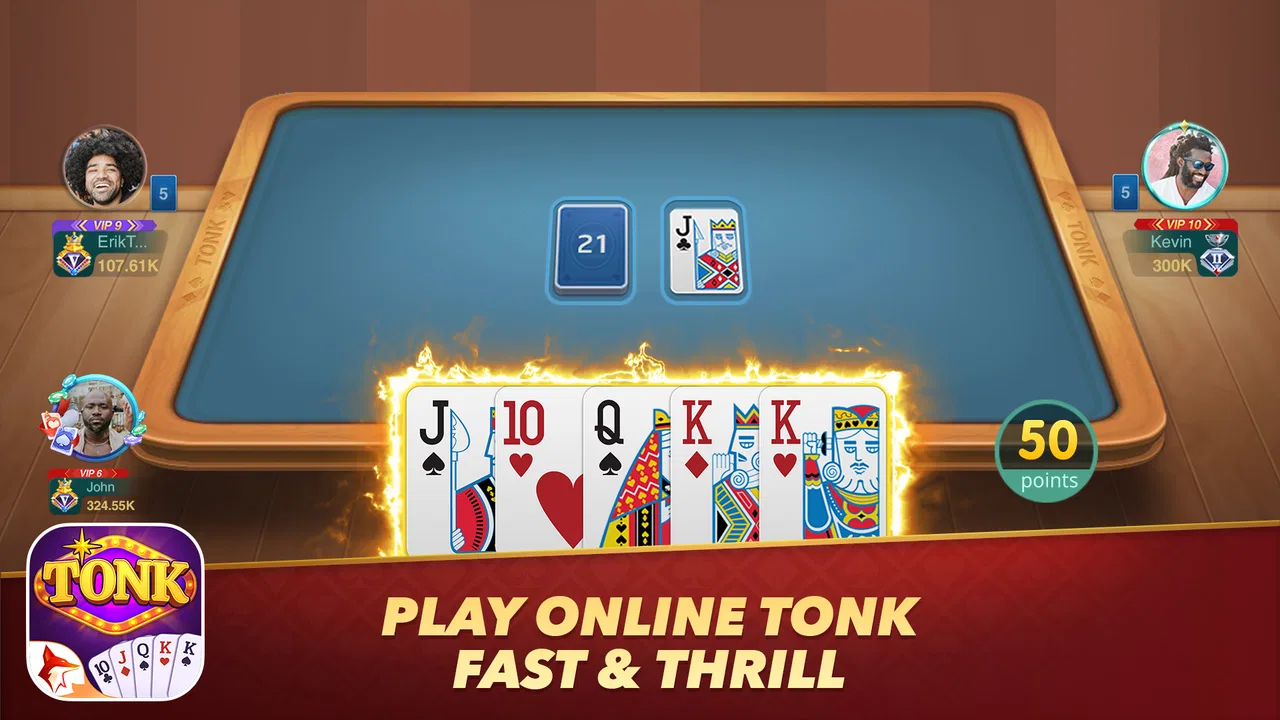
That focus is especially useful for players who enjoy decision-making more than decoration. Tonk rewards attention to the cards already visible, the likely value of the hand, and the timing of a move. Even without turning the experience into a serious study exercise, I find that a focused card game gives me a reason to think ahead rather than tap through a sequence automatically. The appeal is in reading the situation and accepting that a safe-looking move may not be the best one.
One practical habit I would recommend is to pause before discarding. In a fast mobile session, it is easy to choose the card that looks least useful immediately. A better approach is to consider what that discard could give an opponent and whether keeping a flexible card protects me from a bad draw. This is not a special feature of the app; it is a way to get more value from the kind of play Tonk encourages. The smaller screen makes that discipline more important because the temptation to rush is always present.
Another useful approach is to separate entertainment goals from improvement goals. When I only have a few minutes, I can play for the rhythm of the hand and avoid overthinking every outcome. When I have a longer session, I can pay attention to patterns: which cards I tend to hold too long, whether I chase combinations too aggressively, and how often I discard based on emotion rather than probability. That makes the game more satisfying without requiring a formal ranking or competitive structure.
I also see value in using it as a low-pressure social prompt. A person who already knows Tonk can introduce it to a friend through short sessions, explaining decisions as they arise rather than presenting a long rule lesson first. The game’s focused identity helps that conversation stay on one format. I would not assume that every newcomer will understand the flow instantly, though. Anyone unfamiliar with Tonk should take time to learn the rules and the meaning of each action before judging the game’s pace.
The everyday situation where it makes the most sense
Imagine I am waiting for an appointment with enough time for several hands but not enough time to commit to a large adventure game. A dedicated card title is a sensible fit because the mental load is manageable, the session can end naturally, and I do not need to remember a complicated story when I return. The same applies to a quiet evening when I want something more engaging than scrolling but less demanding than a competitive action game.
It can also suit someone who is trying to replace idle phone checking with a small activity that asks for attention. Instead of opening several social feeds, I can play a hand, notice where I made a poor decision, and stop. That use case depends on self-control: a free game with optional purchases can still encourage longer sessions or spending, so I would set a personal limit before playing rather than relying on willpower afterward.
For a family device, I would be more cautious. The Everyone 10+ label makes it broadly approachable, but the purchase range means I would enable the device’s purchase protections and explain that free installation does not mean every in-game item is free. That is a practical step, not a criticism of this particular title. Any card game with optional purchases deserves the same attention when several people share one account.
Where the game may feel less convincing
The main weakness is the information gap created by its understated store presentation. “Game For Us User” does not tell me much about the actual experience, and “Tonk” is a very brief description. Before installing, I would prefer to know exactly how the game teaches new players, what kind of play structure it offers, and how much variety I should expect. Since those details are not communicated clearly in the short wording, a first-time Tonk player may need to spend part of the initial session figuring out whether the game matches their expectations.
That uncertainty matters more than it would for a familiar genre with an obvious format. A player who already knows Tonk can probably make a quicker decision. Someone searching for a general card pastime may not know whether this is the right starting point, and a broader app may explain its choices more clearly by placing several recognizable games side by side. I would therefore recommend this title more confidently to people who are specifically curious about Tonk than to someone who simply wants any card game.
The modest install footprint in the public audience also affects my expectations. I would not choose it assuming the same breadth of community activity or long-term content as a major card platform. That does not make the game poor; it simply changes the risk. If my enjoyment depends on a constantly busy player base, extensive social options, or a large stream of new material, I would investigate those needs before moving away from an established alternative.
There is also a trade-off between simplicity and variety. A focused title can help me learn one game, but it may become repetitive if Tonk is not already a favorite. Someone who wants to alternate between relaxed solo play and several competitive formats may save storage space and time by choosing a multi-game card collection instead. In that case, the focused identity that attracts me here becomes the reason I would skip it.
How it compares with the usual card-game alternatives
Compared with a broad card-game collection, this release makes the most sense when specialization is more important than quantity. A collection is usually easier to recommend to a household with mixed tastes because one person can play a familiar classic while another tries something different. Tonk - Classic Tunk ZingPlay is the more deliberate choice for someone who wants to stay with Tonk and does not need a menu of unrelated formats.
Compared with a traditional physical deck, the app offers convenience: I do not need another person beside me merely to have a card-game session, and I can use a phone that is already in my hand. The physical version remains better for people who value conversation, visible cards on a table, and a shared social atmosphere. I would not present the app as a replacement for that experience. It is better understood as a portable way to keep the game available when a table and a group are not.
Compared with a highly competitive online card platform, the sensible advantage here is approachability rather than prestige. A large platform may be preferable if I care about a substantial community, advanced competition, many modes, or a mature ecosystem. This game is a better candidate when I want a more contained experience and am willing to accept that its smaller public presence may offer less breadth. I would avoid making a purchase decision based on rating alone; a 4.4 average is positive, but it cannot tell me whether the game’s exact style suits my expectations.
For a newcomer, the best alternative may be whichever option explains Tonk most clearly. If another app provides a stronger tutorial or a more transparent description, it could be the easier first step even if this release has the more appealing name or presentation. Once I understand the rules, I can judge whether a dedicated Tonk app feels cleaner and more comfortable than a general platform. That is the key switching question: am I changing because the game itself is better for me, or only because the alternative has a clearer first impression?
What switching would really cost
Moving from a general card app to this one should be relatively easy if I already understand Tonk. The larger cost is not learning a new genre but adjusting to a narrower library. I would lose the convenience of jumping into other card formats from the same home screen, while gaining a more focused route to Tonk. Before switching, I would ask myself how often I actually use those extra formats. If the answer is rarely, the trade-off may be worthwhile.
Moving in the opposite direction can be more sensible when my interest is uncertain. If I am still experimenting with card games, a broader alternative lets me test several styles before committing attention to one. The downside is that variety can become distraction: I may sample everything without becoming comfortable with anything. This title offers a clearer commitment, which can be useful for building skill in one ruleset.
Money is another switching cost. Because the game is free to start but includes optional items priced from $0.99 to $199.99, I would not transfer spending habits automatically from another app. I would first play without buying anything, learn what the basic experience feels like, and decide whether any optional purchase genuinely improves my use. That order protects the evaluation from being distorted by money spent too early.
There is a small compatibility cost as well. Android 8.0 is required, so an older handset may prevent installation even if the game sounds suitable. If I am choosing a card game for an aging phone, I would check the operating-system requirement before rearranging my app library. For anyone on a compatible device, that hurdle is straightforward; for anyone on an older device, a lighter or older alternative may be the practical answer.
Who should try it, and who should skip it
I would recommend Tonk - Classic Tunk ZingPlay to a player who already likes Tonk, wants a free way to play it on Android, and prefers a focused card experience over a large collection. It also deserves a look from someone who enjoys short, thoughtful sessions and is comfortable learning through play rather than demanding a long feature list before starting.
I would be less likely to recommend it to a player seeking a complete card-game library, a strongly established competitive community, or a substitute for face-to-face table time. I would also steer away from it if the only reason for installing is that it is free. Free entry is useful, but the optional purchase range means the app should be approached with clear spending boundaries.
My practical starting plan would be simple: install it only on a compatible Android device, play several sessions without buying anything, and notice whether I enjoy the decisions or merely the novelty. I would keep track of the moments that cause confusion, especially during the first hands, and decide whether the focused format feels refreshing or restrictive. If I want several card games after that trial, I would switch to a collection; if I keep returning specifically for Tonk, this title has earned its place.
My recommendation
My final view is cautiously positive. VNG ZingPlay Studio has positioned this as a straightforward Tonk-focused card game, and that narrow purpose is its clearest advantage. The 4.4 average and growing audience give it enough credibility to justify trying, while the free price lowers the initial barrier. I would not call it the universal card-game choice, because its appeal depends heavily on already wanting Tonk or being willing to commit to one format.
Choose it for focused Tonk sessions, not for a complete card-game ecosystem. That is the decision I would give a friend. Try the free version, protect purchases, and judge the game by whether its concentrated style fits your normal phone breaks. If you want a portable, specific card pastime, it is worth exploring. If you want variety, a busy competitive scene, or the social atmosphere of a real deck on a table, another kind of card experience will probably serve you better.
FAQs for Tonk - Classic Tunk ZingPlay
01What is Tonk - Classic Tunk ZingPlay?
Tonk - Classic Tunk ZingPlay is a mobile card game based on the traditional Tonk, or Tunk, game. It lets players build hands, draw and discard cards, and try to finish with the lowest score or go out before opponents. The app combines classic rules with online matches, casual play, and a digital interface designed for quick games on Android and iOS devices.
02How do you play Tonk - Classic Tunk ZingPlay?
At the beginning of a round, players receive cards and take turns drawing from the deck or discard pile before discarding one card. The objective is generally to form combinations and reduce the value of cards left in your hand. Depending on the selected mode and table rules, players may end the round by knocking or going out, so it is important to check the in-game instructions before starting competitive matches.
03Can I play Tonk - Classic Tunk ZingPlay offline?
The game is mainly designed around online play, including matchmaking and interaction with other players, so an internet connection may be required for its core features. Offline availability can vary by version and game mode. If you lose connection, a match may be interrupted or affected, so a stable Wi-Fi or mobile-data connection is recommended for a smoother experience.
04Is Tonk - Classic Tunk ZingPlay free to download and play?
Tonk - Classic Tunk ZingPlay can generally be downloaded without an upfront purchase, but it may include optional in-app purchases. These can be used for virtual currency, bonuses, cosmetic items, or other gameplay-related advantages, depending on the current version. Review the store listing and payment settings carefully, especially if children use the device, because purchases may accumulate quickly.
05Is Tonk - Classic Tunk ZingPlay suitable for beginners?
Yes, beginners can learn the basic gameplay through practice and by observing how cards are drawn, combined, and discarded. However, the game becomes more strategic when opponents manage their hand efficiently and recognize when to knock or finish a round. New players should start with casual tables, read the rules provided in the app, and avoid spending virtual currency until they understand the scoring system.
Pros
- Simple rules make it easy for new players to start quickly.
- Online matchmaking provides opponents beyond your local friend group.
- Short rounds suit quick gaming sessions during breaks.
- Card animations and sound effects make matches feel lively.
- Progression and rewards encourage regular play.
Cons
- Match quality can vary when opponents have very different skill levels.
- Online play depends on a stable internet connection.
- Ads may interrupt the experience
- especially for free users.
- In-app purchases can speed up access to some rewards or features.
- The game may feel repetitive after extended sessions.

Tonk - Classic Tunk ZingPlay
Gallery